Soft vs. Metal Plate Weight Vests: Which Is Better for Rucking?
If you’ve spent any time shopping for a weighted vest, you’ve probably noticed two very different approaches to adding weight.
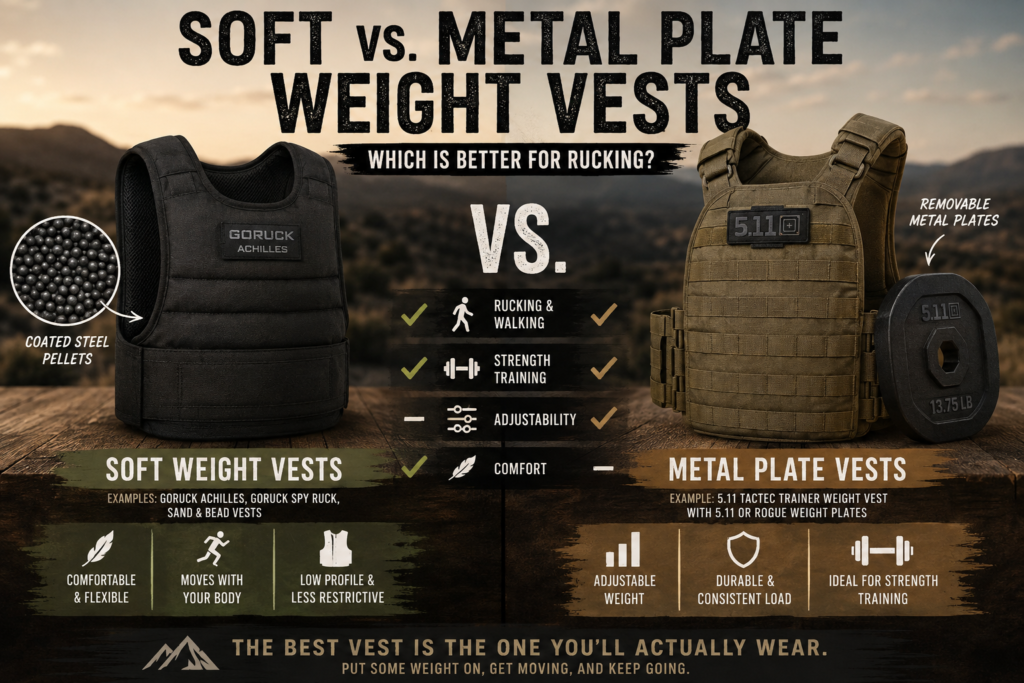
On one side are soft, flexible vests filled with sand, beads, or coated steel pellets. On the other are traditional plate-style vests that use rigid metal weight plates.
Both can make a workout harder. But after using different styles, I think the better question is: What are you actually planning to do with the vest?
Soft Weight Vests: Comfortable and Close to the Body
The newer generation of soft weighted vests has become increasingly popular with ruckers, walkers and fitness enthusiasts.
Instead of inserting a rigid plate, the vest itself contains the weight. Some use sand or small beads, while premium models use coated steel pellets.
The GORUCK Achilles is a great example. It comes in 20- and 30-pound versions and uses specialty-coated steel pellets rather than loose sand. GORUCK says the pellets are designed to resist odor and rust, while the soft construction allows the weight to conform more naturally to the body.
The women’s GORUCK Spy Ruck follows the same basic philosophy, using a soft, pre-weighted design rather than traditional removable plates.
The biggest advantage is comfort.
There isn’t a hard piece of steel pressing against your chest or back. The weight moves with your body, and the vest can feel more natural during exercises such as push-ups, squats, lunges, step-ups and burpees.
For walking and rucking, that flexibility can also make the vest feel less restrictive.
The downside?
You generally sacrifice adjustability.
With an Achilles, for example, you choose 20 or 30 pounds when you buy it. The weight isn’t something you simply remove to turn a 30-pound vest into a 20-pound vest.
That makes soft weighted vests particularly appealing if you know the weight you want and plan to use it regularly.
Metal Plate Vests: More Versatile and Adjustable
Traditional plate-style vests take the opposite approach.
The vest itself is essentially a carrier, while the weight comes from removable plates.
The 5.11 Tactical TacTec Trainer Weight Vest is a good example. It uses internal plate retention straps and accepts 5.11 and Rogue weight plates, as well as the company’s TacTec Weight Plate Sandbag.
5.11 offers multiple plate sizes, including 5.75-, 8.75- and 13.75-pound plates. That means you can change your training load rather than being locked into the weight of the vest.
That is a major advantage.
You might train with 10 or 15 pounds one day, 20 pounds another day and eventually work your way toward 30 pounds.
Metal plates also provide a very consistent load. They don’t settle, shift or conform in quite the same way that loose-fill weight can.
The tradeoff is that rigid plates are, well, rigid.
They can feel more noticeable against your body, and depending on the vest and exercise, the edges and stiffness can become more apparent.
Which Is Better for Rucking?
For walking and rucking, I lean toward the soft weighted vest.
A vest like the Achilles Weighted Vest distributes the weight close to your body without putting a large rigid plate against your torso. That makes it particularly appealing for longer sessions where comfort matters more than adjustability.
For strength training and progressive loading, I lean toward the plate-style vest. The curved plates in GORUCK’s Rucking Weight Vest are a new option that I enjoy.
If you’re doing a structured workout and want to move from 15 to 20 to 25 to 30 pounds, a plate carrier gives you much more flexibility.
And if you train for an activity where carrying a rigid load is part of the objective, the plate-style setup may make more sense.
Soft vs. Metal: The Bottom Line
There isn’t a universal winner.
Soft weighted vests win on comfort and freedom of movement.
Metal plate vests win on adjustability and versatility.
If your primary use is rucking, walking, stair climbing and general conditioning, I’d seriously consider a soft, pre-weighted vest such as the GORUCK Achilles or Spy Ruck.
If you want one vest that can grow with your training and allow you to change weights frequently, something like the 5.11 TacTec Trainer is the more versatile choice. There are many brands out there–I didn’t attempt to list them all there, but a quick search will give you all the choices you’ll ever want.
And there is one more thing worth remembering: the best weighted vest is the one you’ll actually wear.
A 20-pound vest that feels comfortable enough to use several times a week can be far more useful than a 30-pound vest that sits in your closet or garage because you don’t enjoy wearing it.
For ruckers, that’s ultimately what makes the soft-versus-plate debate interesting. The technology is different, but the goal is the same: put some weight on, get moving, and keep going.