
How to Treat Foot Calluses from Rucking
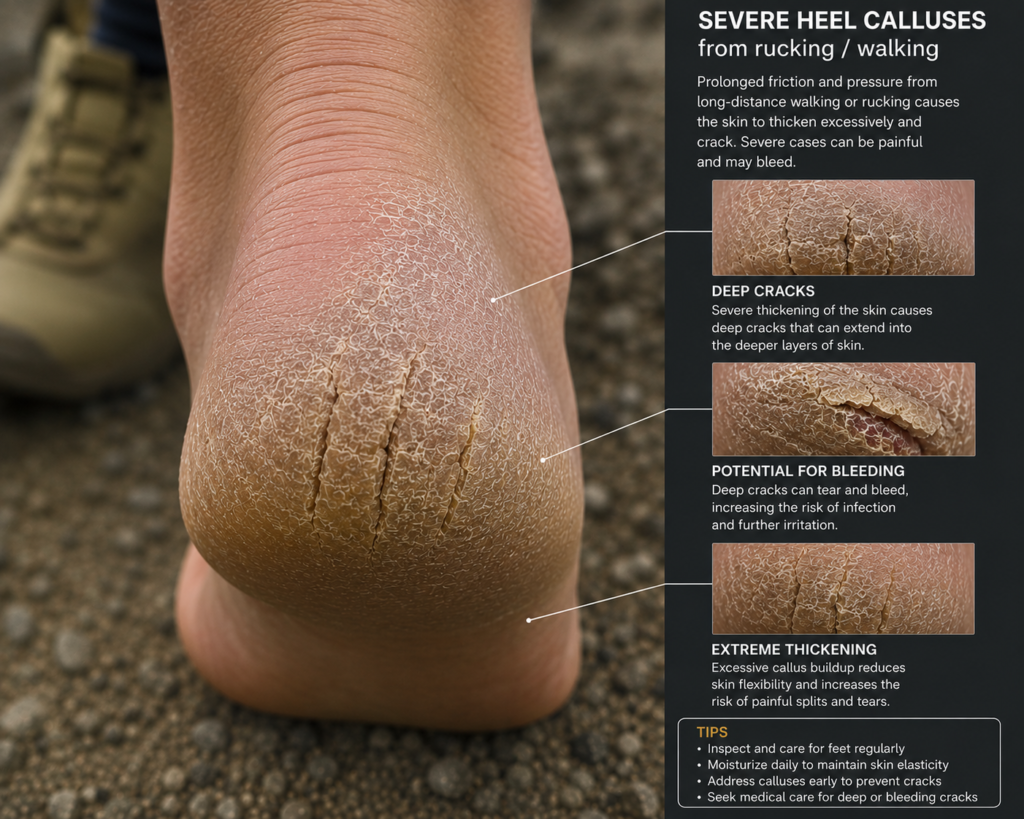
How to Treat Foot Calluses from Rucking (And Keep Moving)
If you’ve been rucking for any length of time, you know your feet take the brunt of every mile. Weighted packs increase ground pressure with every step, and that repeated friction leads to one of the most common complaints in the rucking community: foot calluses. Here’s how to treat them and keep them from slowing you down or causing you pain even when you lay in bed.
What’s Actually Happening
Calluses form when your skin thickens in response to repeated friction and pressure — your body’s way of protecting itself. On a ruck, the combination of a loaded pack, boot or shoe fit, and terrain multiplies that friction significantly compared to regular walking. The heel, ball of the foot, and pinky toe edge are the most common hotspots.
Step 1: Soak and Soften
Start with a warm water foot soak for 10–15 minutes. Add a few tablespoons of Epsom salt to help break down hardened skin and reduce soreness. This is the non-negotiable first step — trying to file or exfoliate dry, hard calluses without soaking first can cause irritation or micro-tears.
Step 2: File It Down
After soaking, use a pumice stone or foot file to gently exfoliate the softened callus in circular motions. Don’t try to remove the whole thing in one session — work in 2–3 passes and let multiple sessions do the heavy lifting. An electric foot file works well if you have significant buildup and want less manual effort.
Step 3: Moisturize and Lock It In
Immediately after filing, apply a thick foot cream — look for one containing urea (at least 40%) or salicylic acid, which actively break down tough skin. For overnight treatment, apply petroleum jelly (Vaseline works great), then pull on a pair of cotton socks to seal in moisture while you sleep (I do this often). Do this 2–3 times per week for consistent results.

Prevention Between Rucks
Treating calluses reactively is fine, but a little prevention goes a long way:
- Wear properly fitted boots/shoes — too loose and your feet slide; too tight and you create new pressure points
- Use moisture-wicking socks with padding at the heel and toe to reduce friction
- Apply moleskin or gel pads to high-friction zones before a long ruck
- Add gel insoles or orthotics to redistribute pressure across the foot
- Lube up — Body Glide or similar lubricants on blister-prone areas reduce the friction that starts callus formation in the first place
When to See a Podiatrist
Most rucking calluses are manageable at home, but if a callus becomes painful, cracks and bleeds, or shows signs of infection, it’s time to see a podiatrist. They can safely trim and debride the buildup and fit you with custom orthotics to offload the pressure point causing the problem.
Your feet carry you through every mile. A 10-minute recovery routine a few nights a week is a small price to pay to keep them event-ready.